
If you've ever noticed your whole body soften in response to a sound - a familiar voice, music you love, the quiet of nature - that's not just your imagination. That's your nervous system moving toward what is called the relaxation response: a measurable physical state of deep rest marked by a slower heart rate, lower blood pressure, reduced muscle tension, and calmer breathing. Sound therapy works with the body's natural relaxation response in a deliberate, structured way.
What Happens in a Sound Therapy Session?
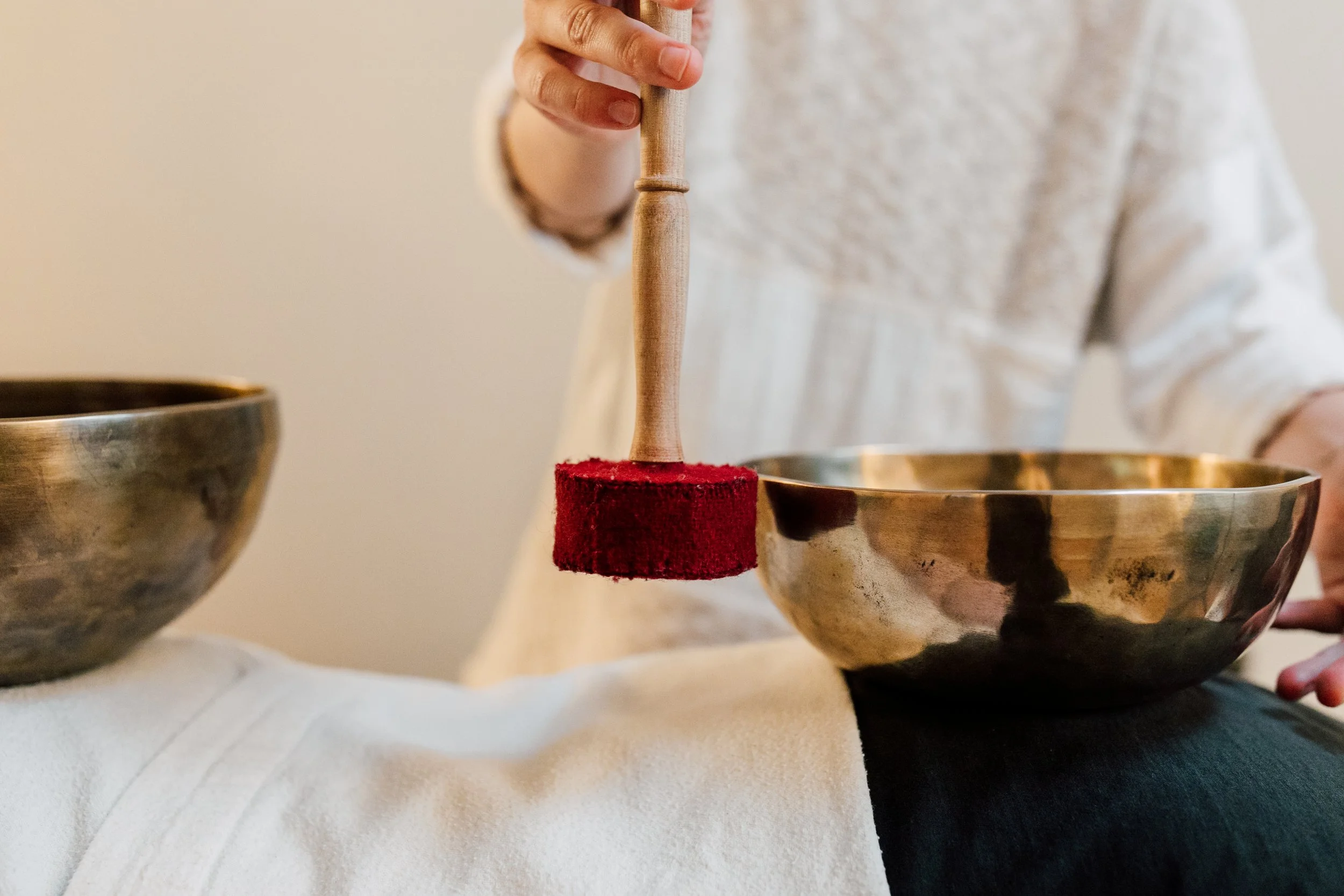
Specially crafted singing bowls are placed on or around the body and played in slow, intentional patterns, producing layered tones and vibrations that wash over and through you. The sound keeps your awareness centered, giving the mind a gentle break from its usual stream of thoughts - it guides your body towards its relaxation response point, independent of any efforts on your part.
Research supports what many people feel firsthand: a single 60-minute session produces significant reductions in tension, anger, fatigue, and depression. And with regular practice, the body learns to return to that relaxed state more quickly each time, building genuine resilience to everyday stress.
Who Tends to Benefit Most?
Sound therapy works best as a complementary practice alongside other care. It has positive effects on chronic stress, anxiety, depression, sleep difficulties, chronic pain, and difficulty concentrating. Early clinical research has also shown meaningful results for Parkinson's disease, autism spectrum disorder, and cancer-related distress.
If you live with PTSD, a serious mental health condition, or have a pacemaker or other implanted device, you’ll want to check with your healthcare provider before trying sound therapy.
More Benefits of Sound Therapy
Studies consistently associate sound therapy with reduced anxiety and depressed mood, lower blood pressure and heart rate, improved sleep, reduced pain perception, and a calmer, more focused mind. A 2019 study found that Himalayan singing bowls induced deeper relaxation more consistently than silence alone — in under 20 minutes.
You don't need to be a meditator or a spiritual seeker to benefit from this treatment modality. You just need to be willing to lie down, close your eyes, and let the sound carry you for a while. Through repetition and practice, the body gains familiarity with the relaxation process and can reach its own relaxation response point with increasing regularity and effectiveness. And as our bodies recognize new patterns around relaxation, and learn to effortlessly flow into them, we gain the ability to resiliently interact with daily stresses in new ways.